

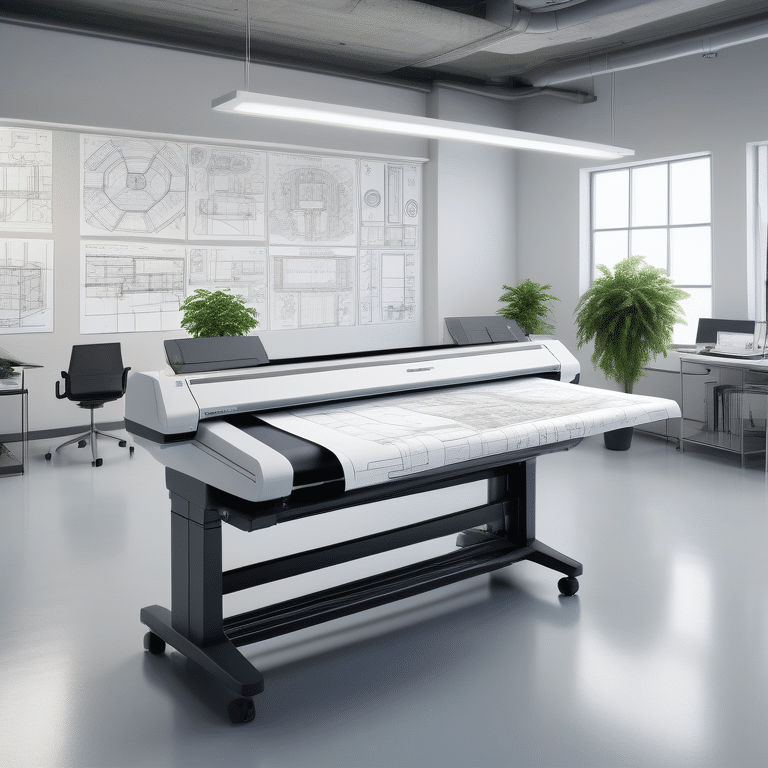
Key Highlights of Large Format Scanning Solutions
- Large format scanners empower businesses to digitize oversized documents like blueprints, maps, and artwork.
- These scanners offer high-resolution scanning capabilities, ensuring every detail is captured with precision.
- Opting for a large format scanner saves physical storage space and allows for easy digital archiving.
- Businesses can choose between flatbed and sheet-fed scanners based on their specific scanning needs.
- Technological advancements continue to shape the future of large format scanning, promising even more sophisticated solutions.
Introduction
In today’s digital world, managing documents well is key for businesses, big and small. Regular scanners are great for standard-sized paper documents. But companies often need something for larger items. This is where wide format scanners, or large format scanners, are useful. These strong devices are made to scan oversized documents. They come with many features and options. You can find flatbed scanners for delicate artwork. There are also document feeders for projects that need to handle a lot of papers. It’s important to understand the details of large format scanners to make smart choices.
https://cta-redirect.hubspot.com/cta/redirect/8095496/dd0036ae-8b87-4824-9c14-db82b87eed8a
Understanding Large Format Scanners
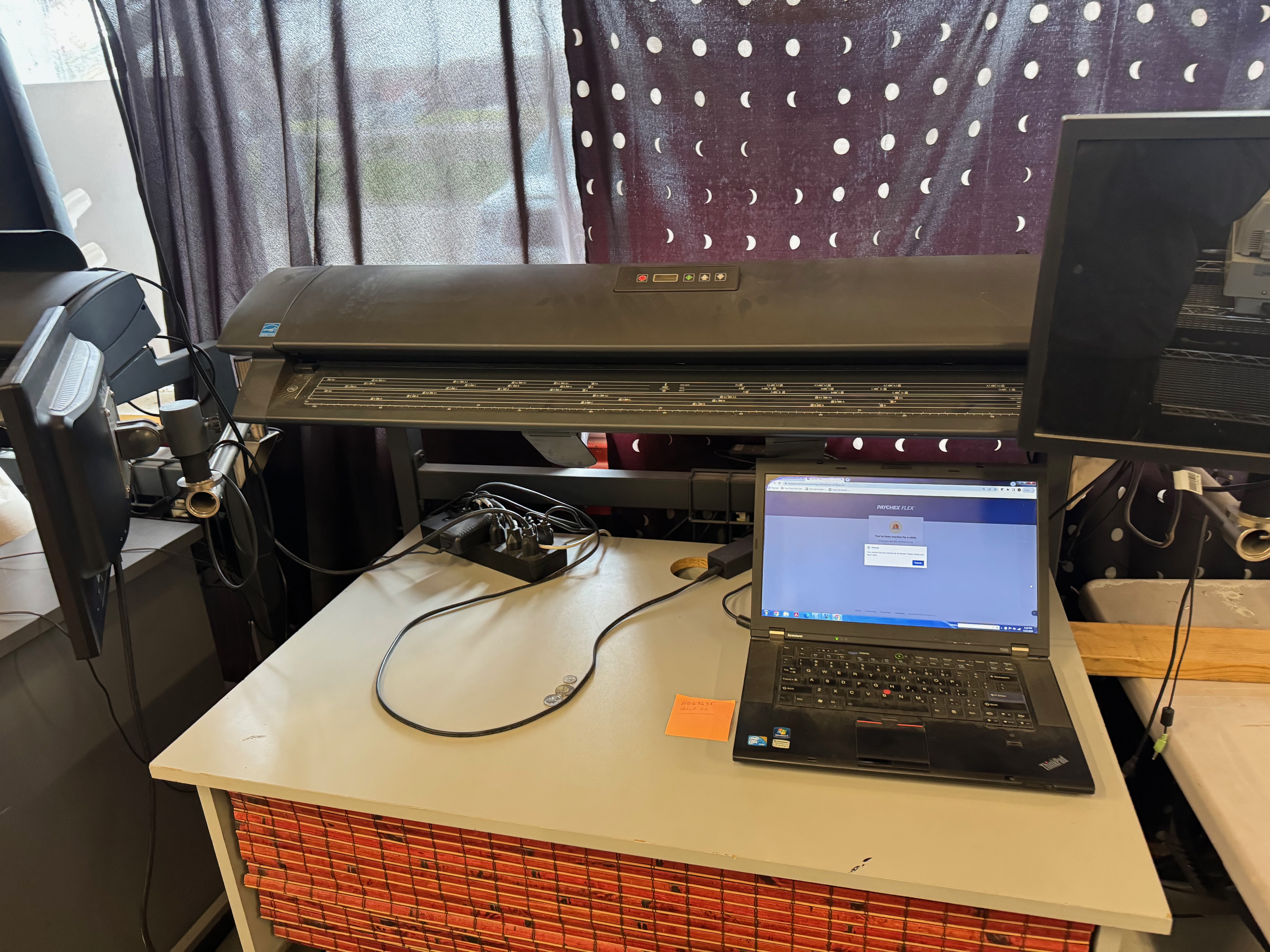
Large format scanners are special devices made to scan documents that are larger than the usual 8.5 x 11 inches that normal scanners handle. These include architectural blueprints, engineering drawings, maps, posters, and artwork. These big documents need large scanners to accurately capture all their details. Large format scanners provide high resolution and precision, making them important for industries where getting things right is crucial.
It’s not only about the size; large format scanners also have many features to meet different needs. Some come with automatic document feeders, which is great for scanning many papers at once. Others focus on scanning delicate documents or books and use a flatbed design to handle them carefully. Knowing about the different types and features of large format scanners can help you choose the best option for your needs.




https://scannernote.com/fujitsu-fi-7700/
The Evolution of Large Format Scanning Technology
The development of large format scanning technology has seen ongoing improvements. These changes have made it better and easier for users. In the past, large format scanners were heavy and slow. They led to new, faster, and more advanced models. One of the first types was the rollfed scanner. It used rollers to pull documents across the scanning bed and worked well with technical drawings and maps.
With new technology, flatbed scanners were created. They are more flexible and can handle different types of documents, including delicate and bound items. Companies like Contex, which are known for good scanning solutions, released models such as the Contex IQ Flex and Contex HD Apeiron series. These helped change the industry.
Today, large format scanners come with great features. They have automatic document feeders to improve speed, high-resolution optical sensors to pick up small details, and advanced software for better images and processing. These updates have made it very easy to digitize large format documents while keeping their quality and accuracy high.
https://scannernote.com/fujitsu-fi-7700/
Key Benefits of Using Large Format Scanners in Various Industries
Large format scanners are now key tools in many industries. They change how businesses handle and use big documents. These scanners help save important historical records and make architectural work easier.
One big benefit is the ability to digitize and store paper documents easily. This helps free up physical storage space. It also makes it simple to share and find information. With digital archives, you can access and share blueprints, maps, or old documents with just a few clicks.
Also, large format scanners do more than just digitize documents. They have a wide scan area and strong image processing software. This means they can reproduce details very accurately. This is important in fields where precision matters. Whether it’s capturing tiny lines in an architectural drawing or keeping the bright colors of an old map, these scanners provide great quality.



Essential Features to Look for in a Large Format Scanner
Choosing the right large format scanner means thinking about a few important things. You need to know your needs and how the features of the scanner fit those needs. Start by looking at the size of the documents you will scan most often. This will help you find out the minimum scan area needed for your scanner.
Next, think about how much scanning you will do. If you have a lot of scanning to do, it’s good to get a scanner with an automatic document feeder (ADF). This makes the job easier and faster. Other things to think about are the scanning resolution, color accuracy, software compatibility, and of course, your budget.
High-Resolution Scanning Capabilities
The key to a good scan is its resolution. A higher resolution is always better. Resolution measures detail in the scanned image. It is measured in dots per inch (DPI). When picking a large format scanner, especially for high-quality jobs, it’s important to focus on those with high DPI.
For example, architectural drawings or engineering blueprints have many details and fine lines. Scanning these at a high DPI makes sure that every detail is clear. This keeps the document true to the original. In some industries, even a small mistake in measurements can create big problems.
So, choosing a scanner with different DPI settings gives you flexibility. This feature lets you change the resolution based on the document you have. This way, you can ensure the best quality each time.



Speed and Efficiency for Large-Scale Projects
High-resolution scanning is essential, but the speed of a scanner is just as important. This is especially true for businesses that work on big projects. Fast scanning means you can digitize more documents quickly. It improves your efficiency and gives you more time for other tasks.
When choosing a scanner, look for features that speed things up. An automatic document feeder can help by loading documents for you, so you don’t have to do it manually. Some scanners also have duplex scanning, which means they can scan both sides of a document at the same time. This saves even more time.
Also, think about the software that comes with the scanner. Many scanners include software that automates image processing, file conversion, and indexing. This aids in making your document management workflow better.
https://www.youtube.com/user/ContexScanners
Comparing Types of Large Format Scanners
Choosing the right large format scanner is important. You need to know about the different types to find one that fits your needs. The two main types are flatbed scanners and sheet-fed scanners. Each type has its own pros and cons.
Flatbed scanners are very flexible. Their flat surface can scan many types of documents, even delicate or bound ones. On the other hand, sheet-fed scanners are faster and better for high-volume scanning tasks.
Flatbed vs. Sheet-fed Scanners: Which Suits Your Needs?
A flatbed scanner has a flat, glass surface which gives it many benefits. You can place documents of different sizes and thicknesses on it. This includes delicate documents, thick books, or items that don’t lie flat. This feature makes flatbed scanners great for handling special materials.
On the other hand, if you need to scan many documents quickly, a sheet-fed scanner works better. These scanners use an automatic document feeder to pull documents through, letting you scan several pages at once. They are fast and efficient, but not good for delicate or bound materials because of how they feed documents.
When choosing between a flatbed scanner and a sheet-fed scanner, think about what you need. If you often deal with different types of documents, like delicate or bound ones, a flatbed scanner is the best choice. If you need to scan a lot of regular-sized documents quickly, then a sheet-fed scanner is the better option.
Standalone vs. Integrated Solutions: Assessing Your Organizational Requirements
When picking a large format scanner, you can choose between standalone devices and integrated solutions. Standalone scanners work by themselves and focus only on scanning large documents. Many people like them because they have special features and powerful performance.
On the other hand, integrated solutions add scanning to machines that already print and copy. These machines do several tasks in one unit. This setup helps with managing documents better since everything is in one place.
The choice of a standalone scanner or an integrated solution depends on what your organization needs. If you often scan large documents and need special features, a standalone scanner is a good option. But if you want to combine scanning with other office tasks and make the workflow easier, then an integrated solution could work better for you.
Top Brands and Models for Large Format Scanners
The large format scanner market has many choices. Several brands provide great quality and performance. Leading names like Contex and Colortrac have made a space for themselves. They offer different types of scanners that fit various needs and budgets.
These brands are known for their technology and are always updating their products. They add new features to keep up with what businesses need. When you choose a large format scanner, it’s smart to research and compare models from these trusted brands. This will help you make a good choice and get a dependable, high-performing device.
Highlighting Industry Leaders and Innovators
Contex is a well-known name in the large format scanning world. They have a strong reputation for their top-quality and innovative scanners. Their HD Apeiron series offers great image quality and high productivity. This shows their dedication to providing the best scanning solutions.
Colortrac is another standout in the industry. They are famous for their SmartLF Scan! series. These scanners are both powerful and affordable. This makes them a good choice for businesses, no matter their size. Colortrac scanners come with simple features that make the scanning process easy and ensure high-quality results.
Both of these leaders keep pushing the limits of large format scanning technology. They focus on research and development. This brings new features that make their scanners strong and reliable investments for businesses that want good document management solutions.
Model Comparisons: Features, Performance, and User Reviews
When choosing the right large format scanner, comparing different models based on features, performance, and user reviews can be invaluable. Consider the Colortrac SmartLF Scan! series, a popular choice for its balance of features and affordability. These scanners are known for their ease of use, fast scanning speeds, and high-quality output.
For those requiring a more portable solution, the WideTEK 24F is an excellent choice. This lightweight and compact scanner offer impressive image quality and versatility, making it ideal for on-site scanning tasks.
Feature | Colortrac SmartLF Scan! | WideTEK 24F |
Scan Type | Sheet-fed | Flatbed |
Max. Scan Size | Varies by model | 18″ x 24″ |
Resolution | Up to 1200 dpi | Up to 1200 dpi |
Connectivity | USB, Ethernet | USB, Ethernet |
Portability | Not portable | Portable |
User reviews highlight the SmartLF Scan!’s intuitive software and consistent performance, while the WideTEK 24F is praised for its portability and ease of setup. Ultimately, the best model depends on your specific scanning needs and budget.
Implementing a Large Format Scanner Solution
Integrating a large format scanner into your existing workflow takes careful planning. A good setup helps you adjust smoothly and get the most out of your new scanner.
First, look at your current document workflow. Find spots where the scanner can help make tasks easier and save time. Then, pick a good place for the scanner. Make sure there is enough space for it and any accessories you might need. It’s also important to train your staff on how to use the scanner well. This training helps maximize the scanner’s abilities.
Preparing Your Workspace for a Large Scale Scanning Setup
A successful large format scanning setup does not just mean plugging in a new device. You need to carefully think about your workspace. Make sure it allows enough room for the scanner’s size and functions to make the scanning process easy.
Start by choosing a specific area that has enough space for the scanner and its accessories. You may also need extension tables for large documents. It’s important to have good lighting to reduce shadows and reflections while scanning. Keeping your workspace clean and organized is key to handling delicate documents and avoiding any damage.
Think about how you will scan your items. Will you be scanning in color or black and white? This choice affects your storage space. Color scans need a lot more space than black and white scans. Having a system for organizing and saving your digital files ensures you can find them easily and manage documents efficiently.
Training and Support for Optimal Use
Investing in a large format scanner is just the beginning of good document management. To get the most out of it, your team needs proper training and ongoing support. Training helps your team use the scanner well. This way, they can use its features and keep it running at its best.
The training should cover everything important. This includes how to operate it, how to maintain it, and how to use advanced features. Giving your team hands-on experience and clear instructions will help them feel good about using the scanner. They will also learn how to fix basic problems.
Ongoing support is as important as the initial training. Encourage your team to contact the scanner provider or use resources when they have issues. A product interest form, online FAQs, or a direct link to technical support can provide help. This will reduce downtime and make sure the scanner lasts longer and stays productive.
Case Studies: Success Stories from Hudson, Wisconsin
The impact of large format scanners is clear in Hudson, Wisconsin. Many businesses and groups, like architectural firms and historical societies, are adopting these scanners. This switch has made their work faster and has improved how they handle and preserve documents.
Local companies in Hudson are changing their daily operations because of large format scanners. These machines are changing how they manage, keep safe, and share important documents.
Local Businesses Revolutionizing Their Operations with Large Format Scanners
Local businesses in Hudson, Wisconsin, are finding out how helpful large format scanners can be. These scanners make it easier to run operations and manage documents in different fields. A good example is an architectural firm that swapped their large blueprints for digital files that are easy to share using a large format scanner. This change has cleaned up their workspace and made teamwork better, both inside the firm and with clients.
Additionally, a local printing and design agency in Hudson has seen better efficiency and savings since they started using a large format scanner. They can now easily turn large graphics and artwork into digital files. This reduces their need for outside vendors and makes their design work smoother.
These stories show how large format scanners help local businesses in Hudson. By changing paper documents into digital data, they make workflows better, cut costs, and boost efficiency. Each scanned image leads to easier access, better teamwork, and keeps important information safe.
How Educational Institutions in Hudson are Benefiting from Advanced Scanning Solutions
The benefits of advanced scanning solutions reach beyond businesses. They are also making a positive difference in schools and libraries in Hudson. These places are using large format scanners to save historical documents, improve learning, and build digital archives that everyone can access.
For example, the Hudson Area Library uses large format scanning to digitize its historical maps and documents. This makes these important resources available to more people. Now, students and researchers can look at high-resolution digital copies of these documents. This keeps the fragile originals safe while making research easier.
In addition, schools in Hudson are using large format scanners to make fun learning materials. Teachers can scan big maps, diagrams, and artwork. Then, they add these to their presentations and online tools. This helps students learn visually and allows teachers to create a more exciting and helpful educational experience.
Future Trends in Large Format Scanning
The world of large format scanning is always changing. New technology is shaping how we manage documents. Looking to the future, we see trends like using cloud services, automating processes, and improving security. These changes will make scanners stronger and more flexible.
Using artificial intelligence (AI) and machine learning (ML) is set to change image processing. This will make scans more accurate and detailed. These improvements will make large format scanners important for businesses and organizations looking for better ways to handle documents.
Technological Advancements on the Horizon
The future of large format scanning has many exciting possibilities due to ongoing technology improvements. A key feature coming soon is the use of artificial intelligence and machine learning in the scanning process. Picture a scanner that can spot and sort different types of documents. It could even fix tilted images and remove unwanted backgrounds.
Another important area is how we handle delicate documents. Recent advancements in sensor technology are making scanners gentler on fragile materials. This means we can safely digitize even the most delicate historical documents. By doing this, we can keep our heritage safe for future generations.
We will also see better connections between large format scanners and cloud storage platforms. This will help us share large files, work together on projects, and access scanned documents from anywhere online with ease.
Predicting the Next Big Thing in Large Format Document Management
As technology keeps moving forward, we need to look at new trends to guess what will come next in large format document management. One trend is the rise of cloud-based document management systems. Together with better large format scanners, this will create a system where capturing, storing, sharing, and working together on large documents is easy and clear.
Also, data security is becoming more important for large format scanning. We can expect new large scale scanners with better security features. These may include biometric authentication, data encryption, and secure access controls. This is very important for industries that handle sensitive information, as it will keep access to scanned documents limited to only the right people.
Moreover, being able to work smoothly with other business systems will shape the future of large format scanning technology. Imagine having a large scale scanner that can take data from technical documents and put it straight into a CAD system or fill a database with info from scanned invoices. This kind of integration will make workflows easier and speed up decision-making.
Conclusion
Large format scanners play a key role in changing businesses in many fields. As technology improves, these large scale scanners provide high-quality scanning and work well for big projects. It’s important to know features like speed and image quality when you compare different large scale scanners. Brands such as [Top Brand] are setting the standard, offering new models that work great. By using large format scanner solutions and getting your workspace ready, you can make your operations smoother and see great Success. stories, like those from Hudson, Wisconsin. Stay ahead by keeping up with future changes in document management. Upgrade your business with the right large format scanner today. When looking for the best large format scanner for architectural drawings, you need a flatbed large document scanner that has high resolution, which means it should be at least 600 dpi. It’s also good to have a USB connection so you can easily transfer files to your design software. Look for models from trusted brands like Contex or Epson. Large format flatbed scanners can digitize canvas art very well. Choose models that handle documents gently. Also, look for ones that have high color accuracy and resolution. This will help you get a true-to-life reproduction. Think about the kinds of documents you will be scanning when choosing between color and monochrome scanning options for large documents. Color scanning works best for artwork or documents that need color details. If color is not important, monochrome scanning is easier for image processing and reduces file sizes.